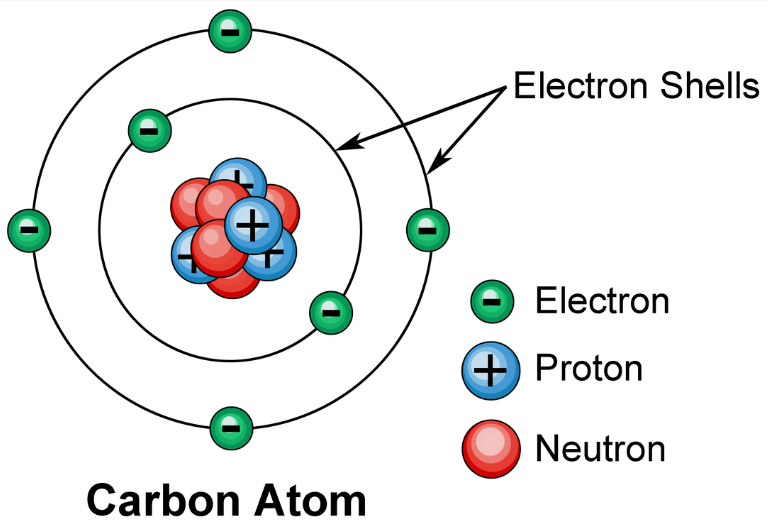
An atom has the same number of electrons and protons. An ion is not an atom, rather it is a particle, just like an atom, but with a charge, where the amount of electrons and protons are imbalanced, giving it an electrical charge. The place where the protons and the neutrons are is called the nucleus of the atom, where the electrons orbit. All these tiny particles arranged like this are defined as atoms.
The elements:
An element is a substance made of only one type of atom. This means that Oxygen is an element, because it is only made of one type of atom. So is carbon, nitrogen, and there is many other elements as well. Elements have symbols, Carbon is ‘C’ Flourine is ‘F’, however, not all elements have only one letter, some have more than one letter in their symbol, such as Co, for Cobalt. But that’s not all. Not all of them sound like their name, for instance, iron, it’s symbol is ‘Fe’. Or potassium, where the symbol is ‘K’.
The early periodic table
Dalton: Dalton found out that elements in compounds always combine in the same properties by weight. He suggested elements were made up of atoms, which was right. He said there was as many kinds of atoms as elements. He used is imagination as a microscope, hydrogen was first. He proposed that each element had an atomic weight/mass and hydrogen was at 1, the lightest atom.
Berzelius: Berzelius set out to find the atomic weight of every single atom. He learned to blow glass, which takes years to learn, to make his equipment. He discovered Selenium, Thorium, and Celeum. He also co-discovered Silicon. He studied over 2,000 different compounds, and he found the atomic weights of 45 different elements.
Dobereiner: Dobereiner called 3 similar elements triads. He said what was similar about them was that they all release hydrogen in water, making an alkaline solution. The 3 elements were lithium, sodium and potassium. They were similar because they all release hydrogen in water.
Newlands: Newlands found out that every 8th metal had similar properties to each other when arranged by increasing atomic mass. He called this the law of octaves, and he was clowned for it. He wasn’t believed because at that time it sounded stupid just to say every 8th element was similar.
Mendeleev called his ‘card game’ chemical solitaire. The 2 methods of sorting elements he combined was properties and atomic weights. The rows in the periodic table ordered atomic weights. The columns were ordered by properties. He left gaps in the table for undiscovered elements, predicted their properties and he was correct!
The Modern Periodic table of elements
The periodic table lists all the elements discovered. The first version of the table was put together by Mendeleev. It's thanks to him that elements with very similar properties are arranged into vertical columns in the table. The vertical columns called groups and the horizontal rows are called periods. Most periodic tables show the proton nummber, symbol, name, and atomic weight of each element. Elements can be either classed as either metals or non-metals. THe zig-zag separates the two. The transition metals form a big block between groups 2 and 3. If you know the properties of one element in a group, you can predict hte properties of other elements in that group. For example: Group 1 elements are all soft, shiny metals which react in a similar way with water (giving off hydrogen gas, H2). Another example is that group 7 elements are all non-metals with a coloured (usually poisonous) vapour.
You can use the periodic to predict patterns in reactions. In a chemical reaction, elements combine to orm new substances. Group 1, 2 and 7 elements are pretty reactive. Group 0 elements (the ‘noble gases’) are all extremely unreactive. They hardly ever take part in chemical reactions. You can use the periodic table to predict patterns in chemical reaactions. For example: The group 1 and group 2 elements get more reactive as you go down the group. Group 7 behave in the opposite way to the elements in groups one and two. They get less reaactive as you go down the group. A more reactive Group 7 element will kick a less reactive group 7 out of a salt solution. E.g. if flourine is added to a solution with iodine salt, the flourine will kick the iodine out of the solution.
Atoms, elements and compounds:
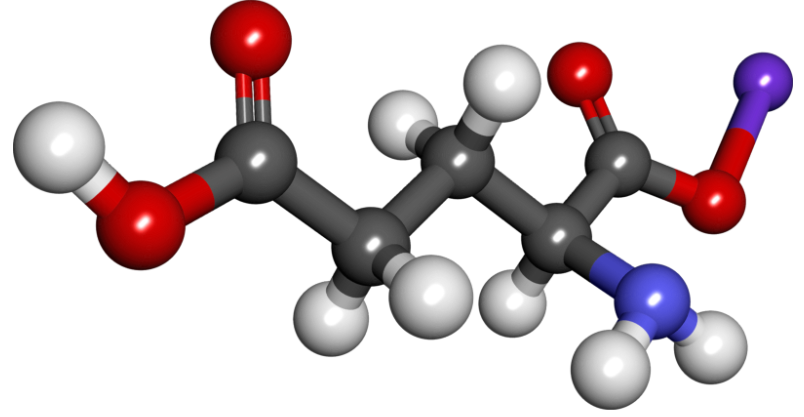
Atoms are particles made up of protons, neutrons, and electrons. Elements are substances made of only one type of atom. Compounds are substances made of 2 or more types of atoms but they are chemically bonded together. A molecule is a substance where 2 or more atoms are chemically bonded together. All compounds are molecules but not all molecules are compounds. There are also diatomic elements, with 2 of the same type of atom chemically bonded together, such as O2. This is a molecule but not a compound. An example of a compound would be water, H20.
Atom diagram:
Compound diagram:
Chemical formulae and naming compounds:
In chemical formulae:
Elements are represented by symbols – the first letter of an element is always uppercase.
Metals go first in compounds.
Use numbers to show how many atoms.
Don't use '1' — if there's only one atom, don't write the number.
Group elements with brackets if needed.
With naming compounds, there are 2 rules:
When 2 different elements react the ending is usually 'something -ide'. For example, Sodium and Chlorine, when reacted together becomes Sodium Chloride. Another example is whne Magnesium and Oxygen react toghether, it makes Magnesium Oxide.
When 3 or more different elements combine — and one of them is oxygen — the ending will usually be 'something -ate'. For example, 1 copper atom, 1 sulphur and 4 Oxygens reacted would be Copper sulphate. Another example is when 1 calcium atom, 1 carbon, and 3 oxygens are reacted would be calcium carbonate.
Reaction of metals and non-metals with oxygen:
Elements are represented by symbols – the first letter of an element is always uppercase.
Group 1 Alkali Metals:
Observations of reactions with water:
Lithium: Fizzing occurs steadily as the metal moves around the surface. The metal melts into a small ball due to the heat generated. No flame is produced, though there may be a faint hydrogen pop. If ignited, then a red flame would appear. A new alkaline solution is formed.
Sodium: The reaction is more vigorous than lithium, with the metal moving around faster. Fizzing occurs. The metal melts into a ball. A yellow flame is produced. Hydrogen gas is released with a noticeable ‘pop’ sound. A new alkaline solution is formed.
Potassium: The reaction is even more vigorous than sodium, with the metal moving rapidly. The metal melts and forms a ball. A lilac flame is produced. The reaction is so vigorous that the hydrogen gas released can ignite, producing a lilac flame from the burning hydrogen. A new alkaline solution is formed.
Rubidium and Cesium: These metals react extremely violently with water, producing large flames and explosions. The metals melt and form a ball as well. They both produce lilac flames or intense explosions due to the heat and violent nature of the reaction. Hydrogen gas is produced, which can ignite and cause dangerous explosions. A new strong alkaline solution is formed.
Trend in Reactivity:
The reactivity of alkali metals increases as you go down the group.
Properties of Alkali Metals (in general):
Softness: Alkali metals are very soft and can easily be cut with a knife.
Low Melting Points: The melting points decrease as you move down the group
Low Density: Many alkali metals are less dense than water, so they can float.
Highly reactive: Alkali metals are highly reactive, especially with water and oxygen.
Shiny Appearance: They have a shiny, metallic luster when freshly cut, but tarnish quickly upon exposure to air.
Word equations for reactions with water:
Lithium + Water → Lithium Hydroxide + Hydrogen
Sodium + Water → Sodium Hydroxide + Hydrogen
Potassium + Water → Potassium Hydroxide + Hydrogen
Rubidium + Water → Rubidium Hydroxide + Hydrogen
Cesium + Water → Cesium Hydroxide + Hydrogen
Trend in reactivity:
Reactivity decreases as you move down the group: As you move down Group 7 (from fluorine to iodine), the reactivity decreases.
Fluorine is the most reactive halogen.
Chlorine is slightly less reactive than fluorine.
Bromine is less reactive than fluorine.
Iodine is the least reactive halogen.
Properties of halogens:
Physical State (at room temperature):
Fluorine: Gas.
Chlorine: Gas.
Bromine: Liquid.
Iodine: Solid.
Colour:
Fluorine: Yellow.
Chlorine: Yellow-green.
Bromine: Red-brown.
Iodine: Shiny-grey (produces purple vapor).
Reactivity:
Fluorine is extremely reactive and the most electronegative (that's not really relevant for now) element.
Chlorine is also very reactive, used in disinfectants and bleach.
Bromine is somewhat reactive but less so than chlorine.
Iodine is the least reactive of the common halogens.
Displacement reactions (with word equations):
In displacement reactions, a more reactive halogen displaces a less reactive halogen from its compound. For example:
Example 3: Observation: If iodine water is added to potassium bromide, there will be no reaction. This is because iodine is less reactive than bromine and cannot displace it.
Example 3: Observation: If iodine water is added to potassium bromide, there will be no reaction. This is because iodine is less reactive than bromine and cannot displace it.
Example 3: Observation: If iodine water is added to potassium bromide, there will be no reaction. This is because iodine is less reactive than bromine and cannot displace it.
Noble gases:
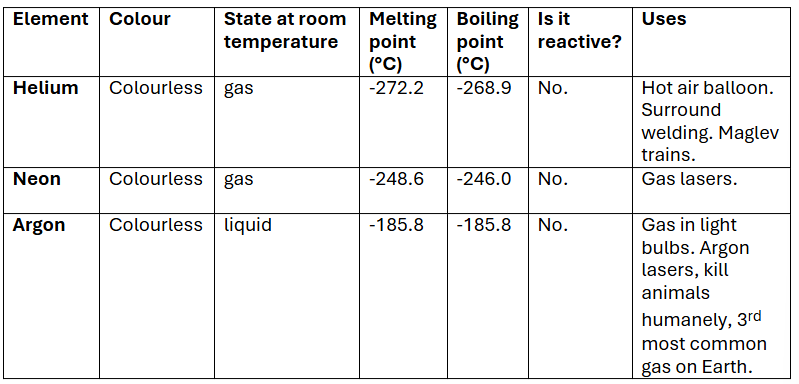
As you go down group 0, the melting and boiling points increase in temperature. The gases also change as they increase as you go down.
We used to use blimps in the 1900s containing hydrogen, which is very light but highly flammable. But then 1 caught on fire so they discontinued. Now helium is used because it’s still light but unreactive.
Argon is also used for inside food packaging because it is odourless and unreactive and brands can use it to advertise the food content and make the bag look fat.
Chemical and Physical changes:
Chemical changes:
Precipitate formed.
Colour change.
Gas released.
Increase in thermal energy.
New substance formed
Physical changes:
Solution formed.
Change of state.
A chemical change is (usually) irreversible. In a chemical change, a new substance has been formed and you cannot get back the original reactants.
Chemical:
Not easily reversed.
New products formed.
Reactants used up.
Often heat/light/sound/fizzing occurs.
Electricity may be produced.
Precipitate may form.
e.g. wood burning
Physical
Easily reversible.
No new products.
Often just a state change
e.g. ice melting
Exothermic and endothermic reactions:
Energy changes occur in all chemical reactions. In some reactions there is a very clear energy change with the transfer of energy by heat, light, and sometimes sound to the surroundings.
Exothermic reactions give off heat to the surroundings, they can be recognised because of the temperature of the surroundings increases.
Endothermic reactions take in heat, they can be recognised because the temperature of the surroundings decreases.
Examples of exothermic reactions:
Heat packs.
Respiration.
Burning candles.
Neutralisation.
Examples of endothermic reactions:
Cold packs.
Photosynthesis.
Energy Level Diagrams:
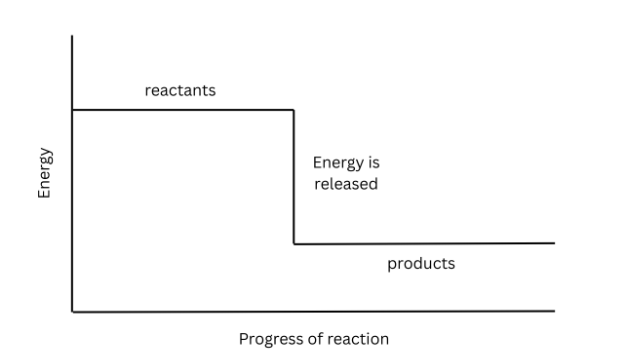
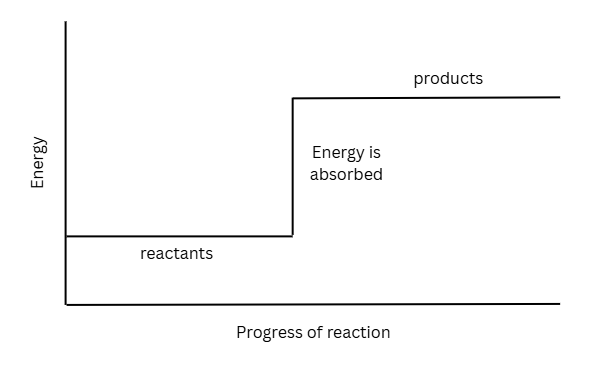
Energy level diagrams are use to show energy changes during reactions. THey show the relative energy levels of the products and reactants. On energy diagrams, the x axis shows the progress of reaction, and the y axis shows the energy level.
When there is an exothermic reaction, the reactants lose energy when being reacted so the products have less energy than the reactants:
When there is an endothermic reaction, the reactants gain energy when being reacted to each other so the products have more energy than the reactants:
Catalysts
Catalysts can be reused.
Speeds up the rate of reaction.
Usually specific to particular reactions.
Not usually part of the chemical reaction, they just speed up the chemical reaction, the catalyst can be removed and reused after the reaction.
Unfortunately, we weren't able to get the information for oxidation reactions, so please refer to your books.